
The movie
Show notes
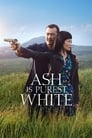
Jia Zhanke’s saga of a woman finding the strength to survive after being abandoned by her small time gangster boyfriend, reflects the anxiety of rapid change in modern China. Jia Zhanke is a Chinese writer and director whose films have garnered steady critical acclaim since the 90s. Years ago I reviewed his 2000 film Platform on this show—since then he’s maintained a prolific output, producing many fiction films, documentaries, and shorts. Now he’s widely considered the most important director from mainland China, and one of the best in the world. One of the remarkable things about him is that although his movies present an ambivalent view of modern China, he’s largely escaped the Chinese government’s censorship. I don’t think it’s just because of his many awards, which lend prestige to Chinese cinema—that never stopped them from censoring other directors before—but because his social critiques are so subtle and stylized, avoiding direct political statements but fearlessly portraying alienation among the Chinese, that the censors either haven’t noticed, or assumed that audiences wouldn’t. His latest film has a wistfully poetic title: Ash is Purest White . It’s taken from a comment made by the main character, a young woman named Qiao, musing about volcanoes, that the hottest volcanic fire creates the purest kind of ash. This comes to represent the trials and ordeals that Qiao, played by Tao Zhao, ends up having to endure. When we first meet her in 2001, Qiao is the girlfriend of a small-time crook named Bin, played by Fan Liao. His gang operates in Datong, a small city that has fallen on hard times. The film doesn’t tell us exactly how these people make their money—we can assume that they collect kickbacks from local industry; it’s well known that corruption is rampant in China. Qiao seems like the perfect counterpart to the gruffly confident Bin. She’s perceptive and cool headed, balancing his somewhat reckless nature. Now, Bin has a boss, from a larger city nearby.
More episodes about Ash Is Purest White