
The movie
Show notes
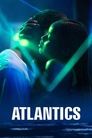
Mati Diop’s first feature tells of a young woman in Senegal, grieving the loss of her lover who died at sea trying to migrate for a better life, and then finding herself challenged by what seems to be the presence of spirits. The central dramatic figure of our time is the migrant, whose shifting, uncertain, and perilous fate reflects that of our world. Atlantics , the first feature film by Mati Diop, expands that metaphor to include the grief and injustice experienced by women, whose oppression makes them refugees in their own family and society. Diop is the niece of the revered Senegalese director Djibril Diop Mambéty, and her film was widely anticipated at Cannes last year, not only because of her uncle, but due to her own excellent short films that led up to this one. Atlantics won the Grand Prix at Cannes, the second most important award next to the Golden Palm, which went to Parasite . The film begins like a realistic social drama. We see a group of construction workers in Dakar, the large coastal city in Senegal, building a huge futuristic looking office building in the city, an incongruous structure in the midst of a poverty-stricken landscape. The workers cause a disruption when they demand their back wages in the paymaster’s office. They haven’t been paid for months, their debt is piling up, and many face eviction for non-payment of rent. Their demands are denied. Our focus then narrows onto one preoccupied laborer, Souleiman, played by Ibrahima Tauroré. After work, he meets up with a young woman he is in love with, Ada, played by Mame Bineta Sane. They kiss and cuddle near the beach; she says that she has to go and will see him tonight; he seems like there’s something he wants to say, but can’t. It turns out that Ada has been promised in an arranged marriage to a man from a wealthy, conservative family. Her family and friends keep telling her how lucky she is, but she’s been sneaking out at night to go to a little club on the shore, where girls socialize w
More episodes about Atlantics