
The 2 movies
Show notes
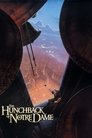
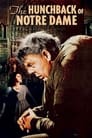
The two most famous film versions of Victor Hugo’s novel featured Lon Chaney in 1923, and Charles Laughton in 1939. In 1831, Victor Hugo wrote one of his most popular novels, “Notre-Dame de Paris.” In English translation it was renamed The Hunchback of Notre Dame , after its main character, a deformed bell ringer at the Cathedral of Notre Dame in 15th-century Paris named Quasimodo. The story tells of a gypsy dancer, Esmerelda, who unfortunately falls under the lustful eye of the cathedral’s archdeacon Claude Frollo. When she rejects his advances, he frames her in a murder, but as she’s about to be publicly executed, Quasimodo, whom she had shown some kindness to earlier, swoops down with a rope from Notre Dame to rescue her and keep in the cathedral under the church law known as “sanctuary.” The novel has since been made into plays, musicals, operas, and a lot of movies. There’s something about this tale that touches people; I think mainly the idea that someone shunned in society for his looks can be lovable, and even a hero. When Lon Chaney played Quasimodo in the 1923 film The Hunchback of Notre Dame , there had already been four previous versions made. But this one, from Universal, was that studio’s biggest and most profitable production in the silent era. An astounding reproduction of the cathedral was constructed on the studio back lot, and there were huge crowd scenes. Lon Chaney had made his name transforming himself into strange characters. Quasimodo was his most elaborate creation up to then, in which he contorted his body and designed genius-level makeup to portray this scary-looking man that we ultimately grow to care about. It’s a fine performance. However, movie technique before the late ‘20s was still often tentative. The director, Wallace Worsley, was a reliable but rather pedestrian studio hand. The film also has the melodramatic overacting, and banality of script and pacing that were acceptable then but difficult to put with now. Sixteen years later
More episodes about The Hunchback of Notre Dame